Showing posts with label xoom. Show all posts

Tuesday, July 19, 2011

Team Android Tablet adds players

By Mark Milian, CNN
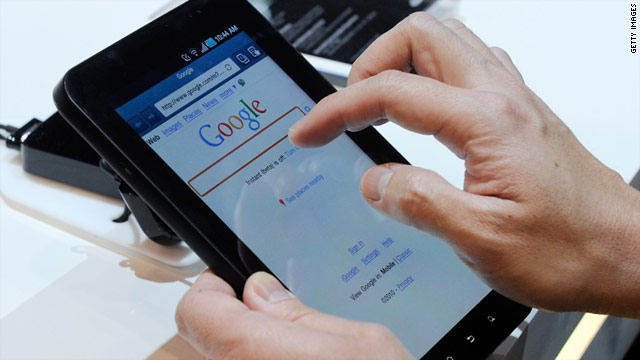
(CNN) -- The Android cabal is reuniting in a new territory.In the burgeoning tablet computer market, Google and its legion of hardware partners appear to be recreating the conditions that helped crown the Android operating system king of the hill in smartphones.


Two newer members demonstrated firm commitments to Team Android Tablet last week.


Sony Electronics plans to launch the S1 and S2 tablets, both running Google's Android, in the fall. Those devices will be Sony's first major tablet products. And together with Adobe Systems, Sony is hoping to breathe life into Android's tablet marketplace with a $200,000 competition for application developers.


"We understand that the Android market today hasn't been exactly what it was forecasted to be," Phil Molyneux, the president and operating chief for Sony Electronics, said during an interview with reporters on Wednesday.


While the total number of Android apps designed for phones continues to skyrocket, into the hundreds of thousands, apps designed for tablets remain a relative rarity. The total, by some estimates, is less than 300.


Compare that to some 90,000 apps made for the Apple iPad or even the 300 available for Hewlett-Packard's just-released TouchPad, which uses the proprietary webOS software. An abundance of apps is crucial to a platform's success, most operating-system providers agree.


A Google spokeswoman declined to make a representative available for an interview. At the company's developers conference in May, Google unveiled a new version of Android that would help app makers design their software to work on most Android phones and tablets.


"We know that high-quality apps are the lifeblood for Android," Android executive Mike Cleron said on stage.


Even Google's partners aren't satisfied in that respect.
"Consumers want more apps for Android tablets," Sanjay Jha, chairman and chief executive officer of Motorola Mobility, said in a recent earnings call. Motorola sold fewer than 250,000 units in the first few months, a far cry from the 300,000 iPads sold on its first day and the 25 million sold in the first 14 months.


Nvidia CEO Jen-Hsun Huang told the technology website CNETthat Android tablets have several problems, including pricing, marketing and app availability.


Over the next four years, Android tablets are forecast to gain market share but fail to overtake the iPad, according to a recent report from Gartner Research. Meanwhile, Google had already overtaken all smartphone competitors for dominance in that industry, less than four years after the launch of the iPhone and three years after the release of the first Android device.


But Android's rise to prominence in smartphones, likewise, did not start with a big bang.


However, its challenges were different then. The first Android smartphones were sold by smaller cellular carriers like T-Mobile USA, and there weren't many devices to choose from. It wasn't until Verizon Wireless threw its weight behind Google, with the Droid campaign, that Android blasted off in the United States and then elsewhere.
Consumers shopping for a tablet today can choose from a bevy of Android devices. Samsung Electronics has been producing tablets in various sizes since last year. The needle didn't move much when Motorola debuted the Xoom for telecom giant Verizon.


Industry analysts and executives are struggling to answer the question: Do consumers want tablets, or do they want iPads?


It's a question worth asking, and this discussion is similar to the portable-media players vs iPods debate. The answer in that case, as Microsoft and others learned, was the latter. People wanted iPods. Samsung isn't coming close to unseating the iPod Touch with its Galaxy Player, based on Android software.


Electronics manufacturers aren't waiting idly to find out the answer to the iPad-or-Android tablet question. They are banding together and again, betting on Google to turn the tides.


Toshiba released the Thrive last week. Amazon is working on a tablet, and the Wall Street Journal reports that it will use Android. Research in Motion's BlackBerry PlayBook tablet will eventually be able to run Android apps, RIM executives have said.


Many players will rely on the success of Android as a means to break into the tablet market, but they are still looking for the impetus that gets consumers onboard.

Wednesday, February 9, 2011

If it's really priced at $800, Motorola's Xoom won't stand a chance against iPad


By Sam Diaz
Just for the record: an $800 price tag on the Motorola Xoom - the first tablet PC running Android 3 (aka Honeycomb) - is way too high.
Details are leaking out today, via a post on Engadget, that Best Buy will start selling the Xoom on Feb. 24 for $799.99. And it appears that there will be some tiered pricing on Verizon’s 3G data plans for the device, ranging from $20 per month for up to 1 GB of data to $80 per month for up to 100 gigs. Mind you, there’s no mention of the pricing for the 4G data usage on this device, which will be 4G upgradeable.
Image Credit: Engadget
In a post after Google’s Honeycomb preview event last week, I noted that the Xoom - or any Honeycomb-powered tablet, for that matter - could be a serious contender to Apple’s iPad if the experience is just as good as the iPad’s. But I also noted that pricing would be key. If it can beat the iPad on price, consumers who like what they see in Android may be compelled to choose Honeycomb over iPad. If the price comes in too high, consumers might not be willing to buy into the hype, choosing instead to go with an established winner - the iPad.
The $800 price tag on the Best Buy ad is $300 more than Apple’s $500 WiFi -only low-end iPad. Make it a 3G-powered iPad and you’re looking at $629 - still a $170 cheaper than the Xoom.
Can you say D.O.A?
That’s what the Xoom will be - Dead On Arrival - if it’s really priced that high. Granted, we don’t know that to be true. There doesn’t seem to be any confirmation yet from Motorola, Google or Verizon - the big names that all appeared on the Xoom’s debut ad during the Super Bowl. (By the way, the commercial, which I’ve embedded below, left everyone at my Super Bowl party with a head-scratching “huh?” as we watched. Kind of a deep message for a Super Bowl ad, if you ask me.)
For the record, I like what the Xoom brings to the table. It appears - just from what I know - to be a top-notch product with a lot of potential. Add to it the 4G capabilities, the expandable storage and, yeah, even Flash, and you’ve got a product that can really make potential iPad buyers stop and pause.
But none of that will matter when all is said and done because that price tag will likely send some consumers - myself included - straight for the Apple store before anyone can even say “microSD card.”
As soon as we get official word on pricing and availability, we’ll be sharing the details with you.

Monday, February 7, 2011

Report: Motorola Xoom, HTC Thunderbolt Due This Month


Someone screwed up at Best Buy this morning, letting slip two big product release dates. Now we may be seeing a new Android-powered tablet and smartphone sooner than we thought.

Onsale dates for Motorola’s new Xoom tablet and HTC’s Thunderbolt smartphone were posted to a Best Buy retailer’s Facebook page early Friday morning. According to the Grand Rapids, Michigan Best Buy store’s status update, we should expect the Xoom to debut on February 23 and the Thunderbolt on February 14.
The status update has been promptly taken down from the page, as the higher ups at Motorola and HTC probably wanted to wait to announce the product debuts at Mobile World Conference, a major mobile industry event occurring in Barcelona, Spain in mid-February.
We can’t say for sure whether or not the release dates will be firm. “The info from the Grand Rapids store was posted in error, as the details included are not yet finalized,” a Best Buy spokesperson told Wired.com. “We will share updated and accurate information when we have it.”
Details on the Xoom have been sparse since the tablet’s announcement at CES in early January. Speculation has filled the void of information — a previously leaked internal Best Buy memo showed a potential $800 price tag for the Xoom, which will run on the upcoming Android update to version 3.0 (Honeycomb). We do know, however, that the tablet touts a 1-GHz dual-core Nvidia Tegra 2 processor, a 5-megapixel back facing camera, and a 2-megapixel front facing camera for video chat.
Motorola’s upcoming Xoom-promoting Super Bowl ad will also tease the company’s tablet, while simultaneously taking a shot at Apple’s famous 1984 Super Bowl ad, making the Cupertino-based company out to be an Orwellian version of itself:

What can the Motorola Xoom do for Google?

By Christopher Dawson


I’ll admit it. I’m not a big football fan. I just can’t get into it. And the Superbowl? Unless the Patriots or the Seahawks are in it, I’m only watching for the commercials. OK, even if the Pats or the Seahawks are in it, I’m still watching for the commercials. Which largely stunk this year. Great. One that I couldn’t help but like, though? Motorola’s ad for the Xoom. It made me chuckle. It made me say, “take that, Steve.” It even made me want a Xoom.


I’m not sure you could get a more direct attack on Apple and their iOS ecosystem. Maybe if a Xoom exploded in Steve Jobs’ hands, but otherwise, this commercial took no prisoners.
Will the Xoom be an iPad killer? Probably not. The iPad is simply too entrenched. However, as the first major foray into the Honeycomb-powered tablet market and, arguably, the strongest competitor to the iPad, the Xoom is an extremely important product to Google. Google, after all, sells neither phones nor tablets. The Nexus One retail debacle took care of that one. They don’t even sell their mobile OS. It’s open source. And yet, Google repeatedly identifies mobile as absolutely critical to their strategy.
Google instead relies on OEMs rolling out truly compelling hardware running Android with compelling apps and compelling interfaces to ensure that millions of people are searching via Google while they’re mobile and to make sure that their AdWords platform is reaching as many mobile customers as possible. The Xoom hits all three areas of compelling. It doesn’t have to be an iPad killer. It just needs to be a worthy iPad competitor.
What can the Xoom do for Google? It can be good enough that people no longer automatically think iPad when they think tablet. A well-done SuperBowl ad doesn’t hurt anything either.

Saturday, February 5, 2011

Can Honeycomb tablets gain ground by being "just as good" as iPad?

By Sam Diaz


The Google executives were still on stage at the Android Honeycomb event yesterday when a reader of our live coverage chimed in to respond to some chatter about Honeycomb not offering anything to make it better than the iPad. His comment was simple but it stuck with me. He wrote:
If it’s as good and not Apple, I’m fine with it.
Clearly, this reader isn’t a big Apple fan - so he has other motivations. But that got me thinking about whether the Motorola Xoom - the first tablet to be powered by Android 3 (aka Honeycomb) - needs to actually be better than the iPad. Is “just as good” enough?
After all, being “just as good” as the iPhone is how I initially saw Android smartphones. Don’t get me wrong. The iPhone is an amazing product and one that I wanted desperately - but wasn’t willing to do the AT&T thing. Now, I’m a big fan of the Android OS and have no desire to switch to the iPhone, regardless of which carrier it’s on. Never do I feel like I’m compromising my smartphone user experience because my device is powered by Android instead of Apple’s iOS.
Now that we’re moving into tablets, it needs to play out the same way. Google needed to make sure that the Honeycomb experience would be just as good as the iPad experience - and from what I’ve seen it is. And, based on some of my own personal metrics, it’s actually better.
Flash is still a big deal. Android tablets will run Flash while iPad doesn’t. And as much as Steve Jobs wants all of us to hate Flash as much as he does, it really does make me stop and pause. Flash exists in my world and I can’t just not have it - especially in a tablet.
The same goes for expandable storage. I never liked that Apple prices its devices - all of them - based on storage capacity. I love the microSD card in my Android phone - that’s where I store my music and photos. And with Xoom coming in with 32 GB of internal storage and the ability to expand to 32 GB more, it’s a one-up over the iPad.
Still, none of that matters if Google and partners don’t get the pricing right.
We still don’t have any pricing information for the Xoom. If Google or the partners don’t come in lower than the iPad, then it’s going to be an incredibly tough sell. If this experience is the same and the pricing is the same, then they’ve just handed the people who were on the fence over to team Apple. After all, the iPad is already a proven winner. Why would anyone pay the same money for a crapshoot that might or might not live up to the hype? I cannot overstate this: Pricing is key.
Certainly, the forthcoming release of iPad2 will be something to watch, especially if there are significant changes to the device or software. But if Google can build a following with tablets the way it has with smartphones, it can be go head-to-head with Apple - forcing both companies to compete on innovation, as well as pricing.
And when that happens, the consumers - all of us - are the ones who win.

Friday, February 4, 2011

Motorola Xoom coming to Best Buy on February 24th, HTC Thunderbolt on the 14th

By Vlad Savov


We're already fatigued of reporting launch dates for devices announced at this year's CES -- it seems like each one has had at least four different potential release points -- but when you get one of Best Buy's official Facebook pages blabbing about when the Moto Xoom and HTC Thunderbolt will be arriving... well, you sum up the strength to do it one more time. Contrary to earlier insider leaks pinning the Xoom to a February 17th launch, Best Buy is now promising to have the vanguard of the Honeycomb tablet revolution on February 24th. That's exactly a week later than our earlier info, so perhaps somebody somewhere decided to push things back a bit. We have no doubt, however, that Motorola is nearly ready with its slate -- there have been plenty of them spotted around the Super Bowl this week. In the meantime, HTC's LTE-equipped 4.3-incher seems to have finally settled down on Valentine's Day as its time of reckoning, a day after the similarly sized Inspire 4G hits AT&T.

T-Mobile details “3D-capable,” Honeycomb-powered G-Slate tablet

After getting little more than a fleeting glimpse at the LG-built G-Slate at CES last month, T-Mobile has finally spilled the beans about its upcoming Honeycomb-based Android tablet, including the news that the device will boast a 3D display—well, "3D-capable," anyway.
Expect the G-Slate to arrive this spring, T-Mobile said Wednesday, complete with a dual-core Nvidia Tegra 2 processor, support for T-Mobile's 4G HSPA+ network, and Honeycomb—the latest, tablet-centric version of Android—under the hood. Still no word on pricing.
As for the G-Slate's display: it'll be 8.9 inches, a little smaller than those on the current iPad and the upcoming Motorola Xoom, but bigger than the seven-inch screens on the Samsung Galaxy Tab and the newDell Streak 7.
T-Mobile didn't reveal the exact resolution of the G-Slate's screen, although the carrier promised that it'll handle both 720p video playback and 3D.
So, wait—are we talking another glasses-free 3D display, like those on the Nintendo 3DS and the upcomingLG Optimus 3D? Well … probably not, given that T-Mobile says only that the G-Slate's screen is "3D capable." In other word, get ready for glasses. Update: A T-Mobile rep has confirmed that the G-Slate will ship with a pair of anaglyph 3D glasses (think red and blue lenses).
In back, the G-Slate will boast a stereoscopic camera in back, good for shooting 1080p-quality 3D video that you'll be able to view on a 3D-ready HDTV via the tablet's HDMI-out port, T-Mobile said. You'll also be able to shoot stills with the rear camera's 5MP sensor, while a front-facing lens (no details on the resolution) will handle video chat.
Other details include a built-in gyroscope and accelerometer, 32GB of internal storage, and support for in-browser Flash video.
Still to be determined: whether the G-Slate will come with a USB port or an SD card slot, as well as details on battery life.
News of the G-Slate comes on the heels of the Dell Streak 7, another Android tablet that went on sale through T-Mobile Wednesday. There's also Samsung's Galaxy Tab, which all four of the big carriers began selling late last year.
While the Streak and the Tab are both running on Android 2.2, an earlier version of the Android OS, the G-Slate and upcoming competitors from Motorola and Samsung are powered by Android 3.0 "Honeycomb," the first iteration of Google's mobile OS to be designed specifically for larger tablet screens.
— Ben Patterson is a technology blogger for Yahoo! News.

Don't count out the iPad competitors

By Adam Ostrow, Special to CNN 


(CNN) -- Amidst reports that the Samsung may be touting inflated numbers for sales of its Galaxy Tab tablet -- and reports that those that do buy the device are returning it at an alarming rate -- one might jump to the conclusion that Apple has little to be worried about in the way of competitors to its iPad.However, that would be a mistake.

While Apple sold nearly 15 million iPads in 2010 and closed the year with 75% market share in the tablet space, that was down from 95% in the third quarter of 2010, before the Galaxy Tab went on sale.

And regardless of whether or not the Galaxy Tab is a hit or a dud --Samsung claims its return rate is actually 2% -- a slew of better Android devices are about to invade the market -- not to mention offerings from other players including RIM and Palm.

One advantage that upcoming tablets like the Motorola Xoom have on the Galaxy Tab is that they'll be using Honeycomb, Google's operating system that's optimized for tablets that was officially revealed on Wednesday.

Believe it or not, the Galaxy tablet is running an older version of Android that's designed to run on smartphones, which essentially renders the device as an awkwardly sized Galaxy S.

Also, let us not forget recent history. It was less than two years ago that pundits were beginning to suggest that Android was a failure. At the time, there were only two Android smartphones on the market, despite the dozens of partners that Google had announced at the launch of Android in late 2007.

To many, the features of the nascent operating system also seemed underwhelming.Fast forward to today and Android smartphones are outselling iPhones, thanks to the multitude of manufacturers now offering devices at a variety of price points -- all the way down to free.

Gizmodo says: "If you consider where Android was when it started versus how far it's advanced in 18 months with Android 2.2, you might get brain freeze."All of which should signal that the tablet race is far from over.

The next few months will see not only the introduction of the Xoom, but also devices from manufacturers like LG, Vizio and Acer.Much like smartphones, having more than one manufacturer to choose from is one of Android's big advantages, as each device offers its own unique features that consumers can weigh when making their selection.

That's no different in tablets, where consumers will be able to choose based on things like operating system, screen size and front-facing cameras, not to mention price.And price could ultimately prove a huge driver of sales of iPad alternatives. Whereas Apple and its carrier partners, AT&T and Verizon, have thus far offered data plans for the iPad on a month-to-month basis, T-Mobile is enticing customers with a $249 retail price when you sign a two-year data contract for the Galaxy Tab.

While the contract-less iPad has its advantages, namely the ability to switch devices more than every two years, it also means you'll need to drop at least $629 initially to get a 3G version of the tablet.

Meanwhile, much like we saw with netbooks, pricing is likely to drop further -- perhaps all the way to free -- as carriers look to lock in customers on their expensive new 4G data networks and manufacturers churn out devices with lower manufacturing costs -- something Vizio, for example, does well.

An iPad 2 (very likely) and subsidized pricing (less likely) could give Apple another pop in the middle of this year, but make no mistake: The same tides that lifted Android past iOS in the smartphone world will soon do the same with tablets.

That's not to say that Apple won't continue to build a huge, lucrative and ever-growing market for itself, but rather to point out the inevitability of its competitors also cashing in on the tablet craze.

Thursday, February 3, 2011

Google's new tablet OS: Honeycomb (FAQ)


by Tom Krazit


After Google earlier today showed off its Honeycomb software, a version of Android designed specifically for tablets, a number of CNET readers posed questions regarding the software, both in our live blog and in e-mails and comments. Here are a few of those questions, answered to the best of our ability.
 
What are the most interesting new features on Honeycomb?
The most significant change is that this operating system release was designed specifically for tablets, unlike earlier Android versions, which were designed mostly for phones and produced a mixed experience--at best--when magnified by the larger screen of the tablet.
As such, Google focused on making the graphics performance for Honeycomb much better than its predecessors, adding a 3D graphics engine and more interesting notification systems that take advantage of the larger screen sizes available on tablets. Google also refined the camera user interface to give those interested in playing around with camera settings many more options and features, as well as a time-lapse video recording feature.
 
When will Honeycomb arrive?
Not soon enough for either Google or Android fans, but not today either. Google representatives said that Honeycomb tablet release schedules are up to the hardware vendors using the software, namely Motorola with the Xoom and LG with the G-Slate. T-Mobile and LG said today that the G-Slate would be available "this spring," while the Xoom is expected to arrive by the end of next month.
For its part, Google said the Honeycomb code is ready and released a software-development kit to developers at the conclusion of today's event.
 
Will Honeycomb know if it's on a phone or tablet?
Yes, Google said software developers will be encouraged to develop tablet-oriented applications that take advantage of the larger screen size, but applications developed for phones running Honeycomb will also work fine on tablets. Applications will have to know which device they're running on in order to deliver the best experience, and certain features, like the Android Market Web Store, won't be usable on phones running Honeycomb.
 
How are they going to deal with fragmentation on Honeycomb?
Probably the same way they deal with it for the rest of Android: by promising that there will be some base level of compatibility across devices, but still running into problems with different screen sizes and versions. Like other new Android versions, there are going to be Honeycomb-specific features like the accelerated graphics performance and 3D stylings within certain applications that might not work well on older versions of Android.
 
Will there be a difference in resolution for Honeycomb apps running on tablets as opposed to phones?
No, Google confirmed that applications will look the same on either phones or tablets, as it demonstrated during today's event with the Fruit Ninja game, designed for phones, running on the Motorola Xoom.
 
Are all Honeycomb tablets going to be dual-core processor powered?
Google said there are no minimum processing requirements of Honeycomb. Some applications will likely require a dual-core chip to work properly, but the operating system itself will work fine on a single core processor.
 
Is one app purchase linked to one device or is it tied to a Gmail account, i.e., does every device that shares the account get the app?
The new Android Market now allows you to see a list of all the applications you've purchased and decide whether or not you want to assign that application to any device registered to your account that runs Android. You can use the same application on both your Android tablet and your Android phone at the same time, as application purchases have always been tied to accounts, rather than devices. It's just that now people are starting to own multiple Android devices, so Google made it easier to manage that list.
Google has posted a replay of the event video on YouTube, and you can see it here.

Would you buy a Motorola Xoom tablet?

by Brooke Crothers


While the Motorola Xoom will be a test of the viability of the media tablet design beyond Apple's iPad, as I've written before, the question is in what numbers will consumers pour, or trickle, into Verizon stores to grab one.
Let's begin by looking at Samsung, which has been trying to test the waters with its 7-inch Galaxy Tab. This is obviously just a pilot run for Samsung, as it does not use Google's Android operating system for tablets (i.e., not "Honeycomb" but Android 2.2 "Froyo") and has hardware (specs here) that will be quickly made obsolete by the Xoom and RIM's BlackBerry PlayBook--not to mention the iPad 2.
And the Galaxy Tab is a bit of an enigma. It's not clear how successful Samsung's marketing effort has been, despite earlier reports. Samsung did not state shipment numbers for the Galaxy Tab in its year-end financial statement, though it cited figures for just about every other marquee mobile device it sells. And this report states--by way of a correction--that Samsung will not confirm a year-end number for the Galaxy Tab.
The point? All things considered, the current design of the Galaxy Tab is probably not a great test case for the market beyond the iPad.
Motorola Xoom shown in dock with keyboard.
(Credit: Motorola)
So, what endows the Xoom with so much potential? This is a concerted effort by Google to make the Android tablet a success. Google has selected Motorola and Nvidia as partners to make sure the first Honeycomb tablet will hit the market with plenty of impact.
"Google's strategy has been to partner with a particular device maker and particular chipmaker and come out with that first generation of product," Richard Shim, an analyst with market researcher DisplaySearch, said in a phone interview earlier this week. As a result, Motorola will be the exclusive purveyor of the initial Honeycomb tablet. And the Xoom's specs are certainly impressive.
Honeycomb promises features such as an improved System Bar, better tabbed browsing, and an improved virtual keyboard--among numerous other tweaks and modifications.
And the choice of Nvidia as the provider of the dual-core silicon--replete with Nvidia's renowned graphics technology--is not surprising, according to Shim. "The smartphone is not very different from the tablet. The difference is that the tablet has a bigger screen, which translates to a bigger viewing area, which means a better graphics opportunity. Nvidia is an ideal candidate," he said.
And Motorola, of course, is good choice for a tablet supplier, as its Droid smartphones have competed well in the U.S. against the iPhone.
So, let's say--hypothetically at this point--that there are both Wi-Fi-only and 3G versions of the Xoom. And let's say rumors about an initial $699 price tag prove correct (another rumored price is $799). Would you consider buying one? Or would Motorola need to go a couple of hundred dollars lower? (The iPad starts at $499 and ranges up to $829.)
Whether consumers snap up the Xoom in impressive numbers could determine if tablets are just an Apple phenomenon or the real deal.